100 North Point Center E suite 210, Alpharetta, GA Mon-Sun: 7:00 AM - 7:00 PM
Licensed & Insured

Siding Contractor in Alpharetta, GA Built for Humidity, Red Clay & HOAs

Alpharetta gets more than 50 inches of rain a year, and summer dew points sit near 70°F. Siding here stays damp for days at a time. Add red clay splashing onto the bottom courses, oak and pine shade feeding mildew on north walls, and 1990s hardboard that swells behind its paint, and you've got a lot of North Fulton homes that look fine from the street but are rotting underneath. Cutting-Edge Alpharetta Siding & Exterior Revival finds that damage, replaces the rotted wood, and installs fiber cement, James Hardie, engineered wood, or board and batten siding that's suited to Georgia's climate.

We know the houses around here: two-story neo-colonials with a brick front, tall basement walls on sloped wooded lots, and gables you can only reach with real staging. Our crews work every elevation safely, from swim/tennis subdivisions in Alpharetta to estate homes in Milton and golf communities in Johns Creek. We also serve Roswell, Cumming, and Suwanee. You get design guidance, HOA architectural review documentation, and regular updates from the first day to the last. Exterior painting and gutter replacement can be added to the same project.

  • Bonded
  • Fully insured
  • Financing available

Request Your Free Estimate

No obligation. Fast, honest quotes.

Your information is never shared.

Online Estimates
Onsite Service
Licensed & Insured
Customer Rated
Local Expertise

Why Alpharetta Homes Wear Out Siding Faster Than You'd Expect

North Fulton is a great place to live, but it's hard on siding. Steady humidity, Piedmont clay, a heavy tree canopy, and a large stock of 25- to 40-year-old homes mean that local siding problems follow patterns we see over and over. Here's what's behind them.

Climate: Humidity, Clay, Canopy and Storms

Alpharetta sits in a humid subtropical (Cfa) zone with more than 50 inches of rain spread across the year. July highs run 88–90°F with dew points in the upper 60s to low 70s, so wet sheathing barely dries out between summer thunderstorms. Winter lows hover near freezing, and the freeze-thaw cycles open up any crack that has already taken on water. The 2014 ice storm showed what ice-loaded oak and pine limbs do to walls and gutters. Spring hail cracks vinyl and dents aluminum. Strong UV fades dark vinyl, and sunlight reflected off a neighbor's low-E window can warp it outright. Underfoot, high-clay Cecil-type soil holds water and splashes red stains onto the lowest siding courses. Shaded north walls grow algae, mildew, and moss, and woodpeckers go after cedar and composite boards.

Built Environment: The 1985–2005 Boom Is Due

Most of Alpharetta, Johns Creek, Milton, Suwanee, Duluth, and east Roswell went up between the mid-1980s and mid-2000s. That era's typical house is a large two-story traditional with a brick or stone front, siding on the sides and rear, and a basement wall exposed on a sloped lot. The siding was often Masonite-type hardboard or LP inner-seal OSB, both of which ended up in class-action lawsuits. Many homes also had early fiber cement, cedar shake accents, or EIFS synthetic stucco, which can trap moisture against the framing. Now that these homes are 25–40 years old, the original siding, the window trim, and the missing kick-out flashing are all reaching the end of their service life. Farther south, 1960s–70s ranches in Sandy Springs, Dunwoody, and Chamblee still have original wood or aluminum siding.

Regulations, Permits and HOA Review

Alpharetta, Roswell, Johns Creek, Milton, Sandy Springs, and Dunwoody usually require a residential building permit when sheathing, structure, or a large share of the wall area is replaced. Each city sets its own threshold. Georgia follows the state-amended IRC for water-resistive barriers and flashing, and the James Hardie warranty only holds if the manufacturer's installation instructions are followed. Homes built before 1978 fall under EPA RRP lead-safe rules. Roswell's Historic District and downtown Alpharetta require design review before you change exterior materials, and reviewers tend to favor wood-look lap siding. In Windward, St. Ives, Country Club of the South, and the Standard Club area, HOA architectural committees approve material, profile, and color before any work starts. That review can add weeks to the schedule, which is why we prepare the documentation up front.

A Resale-Driven, Research-Minded Market

Homes in Johns Creek, Milton, and Alpharetta often sell for anywhere from $500K to well over $1M, so curb appeal has a direct effect on value. A lot of owners bought in the 1990s and 2000s and are now renovating instead of moving. Many new buyers update the exterior before or right after they move in. Homeowners here tend to read reviews, compare warranties, and want a bonded, insured contractor who can get through HOA approval without problems. That's the kind of homeowner we're set up to work with.

Know The Signs

Common Siding Problems We Find on North Fulton Homes

Most siding failures in Alpharetta start out of sight, behind paint, under trim, or along the bottom course. Some can wait a season and some can't. Below are the problems we find most often, roughly what each one costs to leave alone, and how we fix them.

Hidden Sheathing and Framing Rot

Emergency

Water gets behind the siding at window corners, deck ledgers, or roofline intersections and soaks the OSB or plywood sheathing. Over time the sheathing softens and the rot spreads into the studs and rim joists, often while the paint on the outside still looks fine.

Why it happens here

With summer dew points near 70°F and more than 50 inches of rain a year, wet sheathing in North Fulton rarely gets the chance to dry. Many 1990s homes were built without kick-out flashing where the roof meets a sidewall, so the roof runoff goes straight into the wall. Tall basement walls on sloped lots catch extra splash-back. By the time anyone notices, a full tear-off usually turns up damage that was never visible from the yard.

Signs to watch for
  • Soft or spongy spots when you press on siding or trim
  • Paint bubbling below roof-to-wall intersections
  • Interior drywall stains near exterior walls
  • Musty odor in rooms or basement corners
  • Siding pulling away from window edges
  • Carpenter ants or termite activity near the wall base
Local patterns

We see it constantly below roof kick-outs on two-story Windward and Crabapple homes, at deck ledgers on Johns Creek basement walls, and at window corners in Horseshoe Bend. North-facing walls under a heavy canopy are the worst.

Our fix

We open the wall, replace the rotted sheathing and framing, install a new water-resistive barrier and kick-out flashing, and only then put the new siding on.

Swollen or Delaminating Hardboard and OSB Siding

Serious

Masonite-type hardboard and LP inner-seal OSB siding are made from wood fibers pressed together with resin. When moisture gets past the paint, the boards swell, the edges mushroom out, the surface blisters, and eventually the boards crumble.

Why it happens here

Builders across North Fulton used these products heavily from the mid-1980s through the late 1990s, and both were later the subject of class-action lawsuits. Constant humidity, red clay splash on the lower courses, and freeze-thaw cycles break down whatever paint film is left. Now that the boards are 25–40 years old, repainting can't save them. The fibers have already absorbed water and lost their strength.

Signs to watch for
  • Swollen, flared bottom edges on lap boards
  • Blistering or wafer-like texture under paint
  • Boards that crumble when probed
  • Nail heads sunk or popping
  • Fungus or mushrooms at butt joints
  • Paint that won't stay on despite repainting
Local patterns

This is common on the sides and rear of brick-front homes in Alpharetta, Duluth, Suwanee, and east Roswell swim/tennis subdivisions from roughly 1986 to 1999. It's usually worst on the lowest three courses.

Our fix

The real fix is full replacement with fiber cement or LP SmartSide engineered wood, along with sheathing repair wherever the tear-off turns up rot.

Rotted Trim, Fascia and Window Sills

Moderate

Finger-jointed pine trim, fascia boards, and window sills soak up water through their end grain and open joints. They rot from the inside out, so the paint can hide the damage until a corner breaks off or a gutter pulls loose.

Why it happens here

The builder-grade trim used during Alpharetta's boom years had no defense against weeks of near-100% humidity. Gutters that overflow with oak and pine debris dump water right onto the fascia. Window sills facing south and west take the strongest UV and crack, and then the summer storms soak them. Freeze-thaw cycles widen the joints every winter.

Signs to watch for
  • Peeling paint at trim corners and joints
  • Soft wood under a screwdriver test
  • Gutters sagging or pulling from fascia
  • Gaps between trim and siding
  • Visible wood decay on window sills
  • Bird or squirrel entry holes at soffits
Local patterns

Under tree canopy in Milton's White Columns area and Sugarloaf Country Club, we see it most at gable returns, garage door jambs, and the bottoms of door casings. It nearly always shows up alongside rot in the siding next to it.

Our fix

We replace the rotted trim with PVC or fiber cement trim, seal the joints correctly, and add gutter replacement where overflowing gutters are what caused it.

EIFS Moisture Intrusion

Serious

EIFS (synthetic stucco) is a foam board with a thin acrylic finish. Early barrier-style systems had no drainage plane, so water that got in around windows or penetrations stayed trapped against the sheathing.

Why it happens here

Builders put EIFS on a lot of upscale North Fulton homes in the 1990s. The system relies on perfect sealant joints, and Georgia's heat cycles and soil settling crack those joints within a few years. Water then soaks the wall behind the foam, where nobody can see it. Wet sheathing behind EIFS can go years before it shows up inside the house.

Signs to watch for
  • Stains streaking below window corners
  • Cracks in stucco near windows or rooflines
  • Hollow or soft areas when pressed
  • Bulging or delaminating finish
  • Failed caulk at penetrations
Local patterns

We find it on 1990s estate homes in Country Club of the South, St. Ives, and older Alpharetta golf communities. It's often confined to the rear and side elevations, and the worst spots are usually under windows.

Our fix

We remove the EIFS, assess and repair the sheathing, then install fiber cement, stone veneer, or engineered wood over a proper drainage plane.

Hail and Wind Damage

Moderate

Hail can crack and puncture vinyl siding and leave dents in aluminum. Severe straight-line winds can lift and tear off siding panels, and falling limbs can crush whole sections of wall.

Why it happens here

Hail and severe thunderstorm wind hit metro Atlanta periodically, mostly in spring. The mature oak and pine around North Fulton homes means a single storm can bring limbs down onto walls and gutters, as happened in the January 2014 ice storm. Vinyl gets brittle as it ages, so it cracks more easily, and storm chasers from out of town usually show up within a few days.

Signs to watch for
  • Cracked or holed vinyl panels
  • Dents on aluminum siding or trim
  • Missing or flapping panels
  • Spatter marks on the windward side
  • Damaged gutters and downspouts
Local patterns

Vinyl-sided homes in Cumming, Sugar Hill, and Woodstock's Towne Lake usually show it on the west and north elevations, since that's where spring storm fronts come from.

Our fix

We document the damage with photos for your insurance claim, then match and repair the affected sections or replace the full elevation if a match isn't possible.

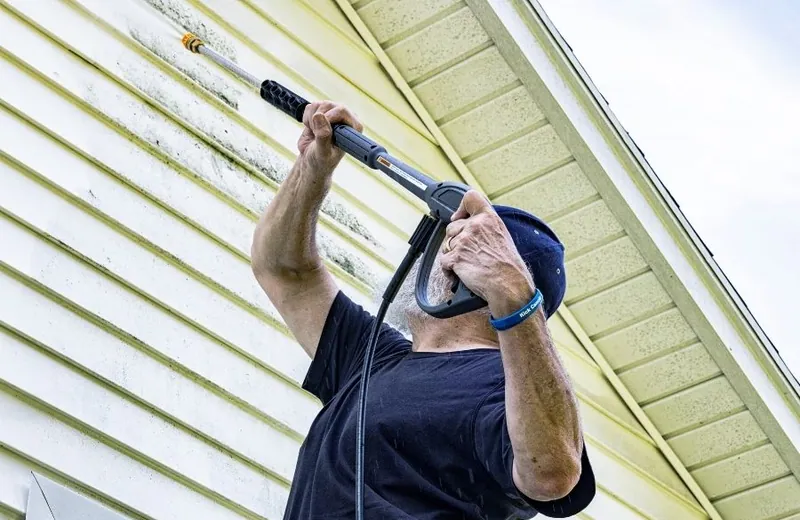
Mildew, Algae and Red Clay Staining

Minor

Green or black biological growth covers shaded siding, and red clay splash leaves stains on the lower courses. On its own it's mostly a cosmetic problem, but it keeps the surface wet and speeds up how fast the paint and wood break down.

Why it happens here

Shaded north walls under dense canopy hardly ever dry out in a climate with summer dew points around 70°F. Cecil-type clay soil splashes up during every heavy rain. Porous wood and composite siding absorbs the iron-rich stain, and pressure washing often can't get it out.

Signs to watch for
  • Green film on north-facing walls
  • Black speckling on trim
  • Orange-red stains on bottom courses
  • Moss at shaded corners
  • Persistent damp feel after rain
Local patterns

It's typical on wooded lots in Milton, Roswell's Horseshoe Bend, and Riverside in Sandy Springs. It's especially bad where landscaping beds sit right against the siding.

Our fix

We clean the siding, correct the clearance between soil and siding, and, at replacement time, specify fiber cement with factory finishes that resist staining.

Missing Kick-Out Flashing and Failed Window Flashing

Serious

Kick-out flashing steers roof runoff away from the wall where a roof edge meets a sidewall. When it's missing, or when window head flashing has failed, water gets funneled straight behind the siding.

Why it happens here

Kick-out flashing wasn't consistently required or installed when most North Fulton homes went up. Two-story homes with lots of rooflines have many of these intersections, and Alpharetta's heavy convective storms put a lot of water through each one. Today Georgia's amended IRC sets flashing requirements for any new installation.

Signs to watch for
  • Vertical stain streaks below roof edges
  • Rot directly under roof-wall junctions
  • Water stains on interior window trim
  • Caulk-only joints at window heads
  • Peeling paint beneath gutters' end caps
Local patterns

This shows up on almost every complex-elevation home we inspect in Alpharetta, Johns Creek, and Suwanee, particularly where garage roofs meet two-story walls.

Our fix

We install code-compliant kick-out and window flashing, then repair the rot it caused. We can do this on its own or as part of a full siding replacement.

What We Do

Siding and Exterior Services for Alpharetta and North Fulton

Every recommendation starts with the house. We look at its age, which way each wall faces, how much shade it gets, your HOA's rules, and your budget. Fiber cement and engineered wood make up most of our North Fulton work, but we install and repair the full range of siding materials, along with the trim, soffits, and accents that finish the exterior.

Specialty

James Hardie Siding Installation

We install James Hardie lap, panel, shingle, and trim products on complete homes or single elevations, including the large two-story and basement walls common in North Fulton.

Our approach

We follow Hardie's installation instructions to the letter for clearances, fastening, and joint treatment so the warranty stays valid. Each job gets a full water-resistive barrier and new flashing at every window and roofline.

In Alpharetta, GA

Hardie holds up to Alpharetta's humidity, woodpeckers, and red clay splash far better than hardboard does, and HOAs in Windward and St. Ives approve it readily.

Best for

Homeowners replacing failed 1990s hardboard who want the most durable, lowest-maintenance option and strong resale appeal.

Fiber Cement Siding Installation

We install fiber cement lap, shake, and panel siding from leading manufacturers, either factory-primed or pre-finished.

Our approach

We use dust-controlled cutting and correct clearances above grade and roofs, and caulk or flash every joint as specified.

In Alpharetta, GA

Fiber cement won't rot, swell, or feed mildew on shaded walls in Milton and Roswell, and it's what most new construction in Cumming and Sugar Hill uses.

Best for

Durability-focused homeowners in humid, wooded settings.

Hardie Plank Siding Installation

We install HardiePlank lap siding in smooth, cedarmill, and beaded textures, with exposures matched to your home's style.

Our approach

We blind-nail or face-nail per the specs and plan joint layout and color-matched trim around your existing brick or stone.

In Alpharetta, GA

This is the profile we use most often when we tie new siding into brick-front neo-colonials in Alpharetta and Johns Creek.

Best for

Traditional two-story homes that need a classic lap look.

Hardie Board Installation

We install HardiePanel vertical sheets, HardieTrim boards, and soffit panels for full or partial exteriors.

Our approach

Panels go on with proper seam layout, batten coverage, and trim details that shed water.

In Alpharetta, GA

Hardie board suits the modern-farmhouse renovations we're seeing on Brookhaven, Ashford Park, and Dunwoody ranches.

Best for

Accent walls, gables, and full panel-and-batten exteriors.

Specialty

Board and Batten Siding Installation

We install vertical board and batten siding in fiber cement, engineered wood, or real wood, scaled to your wall heights.

Our approach

We lay out batten spacing so it lines up with windows and gable peaks, add furring where needed for drainage, and run trim edges straight and true.

In Alpharetta, GA

It's the go-to for modern-farmhouse remodels in Sandy Springs and Chamblee and for gable accents on Crabapple and Milton homes.

Best for

Homeowners after a farmhouse or transitional look with strong curb appeal.

Board and Batten Exterior Installation

We convert the whole exterior to board and batten, often combined with new trim, soffits, and paint.

Our approach

We coordinate the siding, trim, color, and accents so the finished house reads as one design.

In Alpharetta, GA

These whole-house conversions are popular in ITP-adjacent teardown-and-renovate neighborhoods like Brookhaven and Dunwoody Village.

Best for

Full exterior transformations ahead of resale or after purchase.

Vertical Siding Installation

We install vertical panel, reverse board and batten, and vertical lap profiles.

Our approach

Vertical siding needs correct blocking and furring for drainage, and we flash the horizontal seams.

In Alpharetta, GA

We use it on modern infill homes and mixed-profile facades in Sandy Springs and Brookhaven.

Best for

Contemporary designs and accent sections.

Modern Siding Installation

We install modern exteriors that mix panels, vertical boards, metal, and wood-look accents.

Our approach

We plan clean reveals, concealed fasteners where the product allows, and crisp trim transitions.

In Alpharetta, GA

Modern exteriors show up on younger households' renovations near the Perimeter and on custom builds in Milton.

Best for

Homeowners who want a contemporary, architect-style exterior.

Engineered Wood Siding Installation

We install LP SmartSide engineered wood lap, panel, and trim.

Our approach

We follow LP's installation specs for gapping, priming of cut ends, and clearance above roofs and grade.

In Alpharetta, GA

It's lighter and less expensive than fiber cement and still holds up well against humidity, which makes it a good fit for Suwanee and Duluth subdivisions.

Best for

Budget-conscious owners who want a real wood look with better rot resistance.

Vinyl Siding Installation

We install standard and insulated vinyl siding with matching trim and accessories.

Our approach

We nail loosely to allow for expansion and choose light-to-mid colors that resist UV fade.

In Alpharetta, GA

We'll point out where reflections from a neighbor's low-E windows could warp dark vinyl, which is a real risk on the tight lots in Cumming and Woodstock.

Best for

Cost-focused projects and rental properties.

Wood Siding Installation

We install real wood lap and clapboard siding, primed on all sides before it goes up.

Our approach

We back-prime every board, space it off the wall for drainage, and use stainless fasteners.

In Alpharetta, GA

Historic Roswell, Canton Street, and downtown Alpharetta design review often favor wood or wood-look lap.

Best for

Historic homes and cottages that need authentic material.

Cedar Siding Installation

We install cedar lap and bevel siding, finished with stain or paint.

Our approach

We back-prime and use rainscreen spacing and corrosion-resistant fasteners to keep the cedar from staying wet in our humidity.

In Alpharetta, GA

We'll be honest that woodpeckers and mildew go after cedar on wooded Milton lots, and we'll talk through maintenance with you before you commit.

Best for

Owners committed to natural wood character.

Cedar Shake Siding Installation

We install cedar shake and shingle siding, or fiber cement shake that looks like cedar.

Our approach

We set proper exposure and offsets and fully flash gable accents.

In Alpharetta, GA

Shake gable accents are common on 1990s North Fulton homes, and many owners switch to HardieShingle so they don't have to fight rot and woodpeckers.

Best for

Gables, dormers, and cottage-style accents.

Metal Siding Installation

We install steel panel and modern metal siding systems.

Our approach

We use concealed-fastener or batten-seam systems with separation from dissimilar metals and ventilated backing.

In Alpharetta, GA

Metal works well on modern homes, detached studios, and commercial buildings across the 20-mile service area.

Best for

Contemporary designs that need very low maintenance.

Aluminum Siding Installation

We repair, replace, or match aluminum siding, mostly on 1960s–70s homes.

Our approach

We source matching profiles where they're still made, or replace full elevations so the color stays consistent.

In Alpharetta, GA

Original aluminum siding is still around on ranches and split-levels in Doraville, Chamblee, and Norcross.

Best for

Owners of mid-century homes who want to keep their current look.

Stone Veneer Siding Installation

We install manufactured stone veneer for wainscots, columns, chimneys, and accent walls.

Our approach

Every installation gets a proper lath and drainage system with weep screed set above grade.

In Alpharetta, GA

A stone base keeps red clay splash off the siding and complements the stone fronts already common in Johns Creek and Alpharetta.

Best for

Curb-appeal upgrades and lower-wall protection.

Siding Replacement Services

We do complete tear-off and replacement of failed siding, including sheathing and framing repair.

Our approach

We tear off, inspect, repair rot, install a new WRB and flashing, then install the new siding and trim.

In Alpharetta, GA

Replacement is the main fix for 25- to 40-year-old hardboard, OSB, and EIFS homes across North Fulton.

Best for

Homes with widespread swelling, rot, or end-of-life siding.

Siding Repair Services

We do targeted repair of damaged boards, panels, and trim.

Our approach

We match the profile and texture, fix the moisture source behind the damage, and blend the paint.

In Alpharetta, GA

Typical jobs are woodpecker holes, limb strikes, and localized rot under a kick-out.

Best for

Isolated damage on otherwise sound siding.

Soffit and Fascia Installation

We replace rotted fascia and install vented soffit in fiber cement, aluminum, or vinyl.

Our approach

We replace the rotted subfascia, wrap or install new boards, and keep the soffit vented properly.

In Alpharetta, GA

Overflowing, debris-clogged gutters under the oak and pine canopy rot a lot of fascia here. We can add gutter replacement to the job.

Best for

Homes with sagging gutters or animal entry.

Exterior Trim Installation

We replace window, door, corner, and frieze trim.

Our approach

We use PVC or fiber cement trim with flashed heads and sealed joints.

In Alpharetta, GA

Rotted window trim is the most common repair we make on Alpharetta homes from the boom years.

Best for

Rotted casings, sills, and corners.

Siding Inspection and Consultation

We assess the condition of your siding, check for moisture problems, and talk through material options.

Our approach

We probe and visually inspect every elevation, check flashing, and take photos to document what we find.

In Alpharetta, GA

An inspection is useful for pre-listing prep, buyers' due diligence, and post-hail insurance documentation.

Best for

Anyone who's unsure whether their siding needs repair or replacement.

Asbestos Siding Removal and Replacement

We replace older cement-asbestos siding with modern materials.

Our approach

Removal is handled under applicable abatement rules, with qualified abatement professionals brought in where required, before new siding goes on.

In Alpharetta, GA

Cement-asbestos siding still turns up on some mid-century homes in Sandy Springs, Chamblee, and Doraville.

Best for

Older homes with brittle, tile-like shingle siding.

Mobile Home Siding Replacement

We replace damaged or dated siding on manufactured homes.

Our approach

We use lightweight vinyl or metal systems sized for manufactured-home framing.

In Alpharetta, GA

These are hail and wind repairs and full upgrades across our 20-mile radius.

Best for

Manufactured homeowners who need weather-tight, affordable siding.

Commercial Siding Installation

We install siding on small commercial, retail, and office buildings.

Our approach

We schedule around business hours, maintain site safety, and choose durable, low-maintenance materials.

In Alpharetta, GA

Commercial work includes storefronts near downtown Alpharetta, Canton Street, and Suwanee Town Center.

Best for

Property owners refreshing commercial exteriors.

Siding Installation

We do general siding installation for additions, new builds, and remodels.

Our approach

Every installation follows the manufacturer's specs and Georgia's amended IRC flashing and WRB rules.

In Alpharetta, GA

That covers additions on Alpharetta basement homes and new-build trades in Milton and Cumming.

Best for

Any project that needs a properly installed new exterior.
Simple & Transparent

How a Siding Project Works With Us

Most North Fulton siding projects run into the same hurdles: hidden rot, HOA approval, and steep wooded lots. Our process plans for each one, so there are fewer surprises once the old siding comes off.

Inspection and Moisture Assessment

  • Probe trim, sills, and lower courses on every elevation
  • Check kick-out, window, and deck flashing
  • Photograph damage, including hail evidence for insurance
  • Identify the existing material (hardboard, OSB, EIFS, wood)

On pre-1978 homes in Sandy Springs, Dunwoody, and Chamblee, we note lead-safe (EPA RRP) requirements during the inspection.

60–90 minutes on site, usually within the week

Design Guidance and Written Proposal

  • Compare fiber cement, engineered wood, and vinyl for your walls
  • Plan profiles, colors, and how new siding meets brick or stone
  • Itemize scope, rot-repair allowances, and add-ons like painting or gutters
  • Review financing options
Proposal typically within several days

HOA and Permit Paperwork

  • Prepare HOA architectural review packets with specs and color samples
  • Coordinate city permits where required
  • Address historic design review for Roswell or downtown Alpharetta

Review committees in Windward, St. Ives, and Country Club of the South often meet on fixed schedules, so we submit early.

1–6 weeks depending on HOA or historic review

Tear-Off, Rot Repair and Installation

  • Protect landscaping and set staging or lifts for tall and basement walls
  • Remove old siding and replace rotted sheathing, framing, and trim
  • Install water-resistive barrier and code-compliant flashing
  • Install new siding, trim, soffit, and accents

We plan rain days into the schedule and time paint application for proper cure during the summer heat.

Often 1–3 weeks on site for a typical home

Final Walkthrough and Documentation

  • Walk every elevation with you
  • Complete touch-ups and magnetic nail sweep
  • Provide product and warranty paperwork
  • Close out permits and HOA records
Final day of the project
The Cutting-Edge Alpharetta Siding & Exterior Revival Difference

Why Alpharetta Homeowners Choose Cutting-Edge

We Know How North Fulton Homes Fail

We've pulled siding off enough 1990s two-stories to know where the trouble hides. It's below roofline kick-outs, at deck ledgers, around window corners, and along the bottom three courses where red clay splashes up. We go into an Alpharetta, Johns Creek, or Milton home expecting hardboard swelling, EIFS moisture, and builder-grade trim that has run out of life. That's how we can write an accurate proposal with realistic rot allowances, instead of one that falls apart and changes the price once the walls are open.

Rot Gets Fixed Before New Siding Goes Up

Putting beautiful new siding over wet, soft sheathing just hides the problem until it comes back worse. We replace rotted wood siding, trim, sheathing, and framing before any new material is installed, then add a proper water-resistive barrier and flashing. In a climate with 50-plus inches of rain and summer dew points near 70°F, the layer behind the siding matters as much as the siding itself. That's what makes a new exterior last decades instead of a few years.

Bonded and Insured for Your Protection

Siding work involves ladders, lifts, heavy material, and open walls on homes that are often worth $500K to $1M or more. We're bonded and insured, so you're protected if something goes wrong on site. Many homeowners here research contractors carefully before they hire, and we welcome that. Ask for our documentation at your inspection and we'll provide it.

HOA Documentation Handled for You

Architectural review committees in Windward, St. Ives, Country Club of the South, and many Suwanee and Duluth subdivisions approve material, profile, and color before work can start. We prepare the submission packet with product specs, color samples, and elevation details, and we'll answer the committee's questions. That keeps your project from stalling for weeks and keeps you on good terms with your HOA.

Equipped for Tall Gables and Complex Elevations

A typical North Fulton house has a two-story front, a three-story rear basement wall, tall gables, and mixed brick, stone, and siding, often on a sloped, wooded lot. Our crews bring the staging and lifts to reach each section safely and install it properly. We also put down protection for landscaping, decks, and driveways and plan how the new siding will meet existing masonry so the finished house looks deliberate.

Design Guidance That Thinks About Resale

Should you go with fiber cement, LP SmartSide, or insulated vinyl? Lap, board and batten, or shake accents? We'll walk you through the trade-offs in durability, humidity resistance, cost, and how each will look to buyers in your neighborhood. We'll also flag local risks, like dark vinyl warping from reflected low-E window light or woodpeckers going after cedar near the tree line.

Consistent Updates and One-Stop Exterior Work

You'll know what's happening from start to finish, including when rain shifts the schedule, what we found behind the old siding, and when inspections are booked. Need exterior painting or new gutters too? We can add them to the same project, so one team coordinates the whole exterior. Financing is available to help you spread out the cost.

Trusted Locally

Bonded, Insured and Focused on North Fulton Exteriors

20-mile
Service Radius Around Alpharetta
18
Communities Served
25
Siding & Exterior Services Offered
BondedInsuredFinancing available
Where We Work

Siding Service Areas Around Alpharetta

We serve homeowners within a 20-mile radius of Alpharetta. That takes in the golf communities of North Fulton, the newer fiber cement subdivisions of south Forsyth and Cherokee, and the mid-century neighborhoods near the Perimeter. Each area has its own building stock and its own siding problems.

North Fulton Core

AlpharettaMiltonRoswellJohns CreekMountain Park

Gwinnett and Forsyth Corridor

DuluthSuwaneeSugar HillCummingBerkeley LakeWoodstock

Perimeter and Inner Suburbs

Sandy SpringsDunwoodyBrookhavenPeachtree CornersNorcrossChambleeDoraville

Not sure if we cover your area? Call (770) 766-1663.

Transparent Pricing

What Siding Costs in Alpharetta and North Fulton

North Fulton homes are bigger and taller than average and often have hidden rot, so local siding costs usually run higher than national averages. These ranges reflect the large two-story and basement homes common here. Your written proposal will itemize your actual project.

Primary Factor

Siding Material

Material choice changes the total more than anything else. Vinyl is usually the cheapest to install, and LP SmartSide engineered wood comes in somewhere in the middle. James Hardie and other fiber cement products cost more but stand up best to Georgia's humidity, woodpeckers, and red clay. Cedar, stone veneer, and specialty metal systems are at the top end. Pre-finished fiber cement costs more up front but saves you an exterior paint job.

Primary Factor

Wall Area and Home Height

Siding is priced by the square of wall coverage (100 sq ft). A typical North Fulton two-story with a brick front might have 2,000 to 3,500 square feet of siding on its sides and rear. Tall gables and three-story basement walls on sloped lots need staging or lifts, which adds labor. Complex elevations with lots of corners, dormers, and rooflines take more cutting and flashing work than a simple box shape.

Major Variable

Hidden Rot and Sheathing Repair

On a 1990s home with hardboard, OSB, or EIFS, opening the walls often turns up rotted sheathing or framing. We include a realistic allowance in the proposal and photograph anything we find. Sheathing replacement typically adds a few dollars per square foot wherever it's needed, and framing repairs at kick-outs or deck ledgers are priced per area. Catching the problem early keeps this cost down.

Secondary Factor

Trim, Soffit, Fascia and Accents

Replacing rotted window trim, fascia, and soffits with PVC or fiber cement adds to the total but stops the most common failure points around here. Stone veneer wainscots, shake gables, and board and batten accents add design value. Add-ons like exterior painting or gutter replacement can be bundled with the project so one crew handles the whole exterior.

Secondary Factor

Permits, HOA and Lead-Safe Requirements

City permit fees, HOA submission prep, and historic design review in Roswell or downtown Alpharetta add some cost and time. On pre-1978 homes in Sandy Springs, Dunwoody, Chamblee, and Doraville, lead-safe EPA RRP practices add containment and cleanup steps. Asbestos siding removal requires the right abatement handling, which also affects the price.

Typical projectDetailsEstimated range
Targeted rot and trim repairRepairing rot under a roof kick-out, replacing several siding boards and window trim, and installing new kick-out flashing on an Alpharetta two-story$1,200 – $4,500
Soffit and fascia replacementReplacing rotted fascia and installing vented soffit around a 2,800 sq ft North Fulton home, with optional gutter replacement$4,000 – $10,000
Vinyl or engineered wood side-and-rear replacementTearing off hardboard on the sides and rear of a brick-front Suwanee or Duluth home, about 2,000–2,500 sq ft of wall area, plus moderate sheathing repair$18,000 – $38,000
Full James Hardie replacement on a large homeAbout 3,000–4,000 sq ft of wall area on a Johns Creek or Milton basement home with tall gables, new trim, rot repair, and painting$40,000 – $85,000+

Financing is available, so you can deal with failing siding now instead of waiting for the rot to spread. Ask about options during your inspection. In Alpharetta's resale-driven market, a new fiber cement exterior protects the structure, avoids the much larger cost of framing repairs later, and gives buyers the curb appeal they expect in $500K–$1M+ neighborhoods.

Questions & Answers

Siding Questions From Alpharetta Homeowners

How much does new siding cost in Alpharetta?

Most full siding replacements on North Fulton homes run from roughly $18,000 to more than $85,000. The total depends on material, wall area, height, and how much hidden rot we find. Vinyl and engineered wood are at the lower end, and James Hardie fiber cement on a large basement home with tall gables is at the higher end. Smaller jobs like trim and rot repair often fall between $1,200 and $4,500. Because 1990s homes so often hide sheathing damage, we include a realistic repair allowance in the written proposal so the price doesn't jump unexpectedly once the walls are open.

How long does a siding replacement take?

Once work starts, a typical Alpharetta or Johns Creek home takes about one to three weeks on site. Large estate homes with complex elevations and extensive rot repair take longer. The bigger variable is usually what happens before we start: HOA architectural review can take one to six weeks depending on when the committee meets, and city permits add some time too. Rain is another factor, since we get more than 50 inches a year. We build weather days into the schedule and keep you updated whenever it changes.

Do I need a permit or HOA approval to replace siding?

Often, yes. Alpharetta, Roswell, Johns Creek, Milton, Sandy Springs, and Dunwoody usually require a residential building permit when sheathing, structure, or a large amount of wall area is replaced, and each city sets its own rules. If you're in an HOA community like Windward, St. Ives, or Country Club of the South, you'll likely need architectural approval of the material, profile, and color first. Homes in Roswell's Historic District or downtown Alpharetta need design review. We prepare the HOA documentation and coordinate permits as part of the project.

Is fiber cement or engineered wood better for Georgia humidity?

Both are big improvements over the 1990s hardboard they usually replace. James Hardie fiber cement won't rot or swell, it resists woodpeckers, and it handles red clay splash and shaded, damp walls very well, which is why we recommend it most for North Fulton. LP SmartSide engineered wood is lighter, often costs less, and resists moisture well if it's installed and painted correctly. Insulated vinyl is the budget option, but dark colors can fade or warp. We'll go over the trade-offs for each wall of your house.

When should I replace siding instead of repairing it?

Repair makes sense when the damage is isolated, like a woodpecker hole, a limb strike, or rot under a single kick-out. You should replace if your hardboard or OSB siding is swelling or flaring at the bottom edges on several walls, if the paint won't stay on, if you've got EIFS with moisture showing, or if probing finds soft spots on more than one elevation. Most 25- to 40-year-old North Fulton homes with original composite siding are at that point. Act quickly if you see interior stains or soft sheathing, because rot spreads into the framing.

How can I prevent siding damage on my North Fulton home?

Keep gutters clear of oak and pine debris so they don't overflow onto the fascia. Keep mulch and soil at least six inches below the bottom of the siding to cut down on red clay splash. Trim branches back from the walls to improve airflow and keep limbs off the house in a storm. Make sure kick-out flashing is in place wherever a roof meets a sidewall. Clean mildew off north-facing walls every year, and repaint wood trim before the paint fails. Catching problems with a periodic inspection costs far less than repairing framing later.

What should I do after hail or storm damage?

Photograph the damage as soon as it's safe, including cracked vinyl, dented aluminum, missing panels, and any limb impacts. Then call your insurance company. We can inspect the house and document the damage elevation by elevation to support your claim. Be careful with out-of-town storm chasers who knock on doors after metro Atlanta hail events. Look for a contractor who is local, bonded, and insured and who gives you a detailed written scope. If a limb has opened up a wall, temporary weather protection should go up right away.

Do you handle older homes with lead paint or asbestos siding?

Yes. Many 1960s–70s homes in Sandy Springs, Dunwoody, Chamblee, Doraville, and Norcross were built before 1978 and fall under EPA RRP lead-safe practices, which means containment, careful removal, and thorough cleanup. Some mid-century homes also have cement-asbestos siding, which has to be removed under the applicable abatement rules, with qualified abatement professionals brought in where required. We'll identify these materials during the inspection and explain how they affect your scope and cost.

Find Us

Serving Alpharetta, GA & Nearby

100 North Point Center E suite 210, Alpharetta, GA, 30022

Ready When You Are

Find Out What's Behind Your Siding Before It Spreads

The paint may still look fine while the wall behind it is rotting. Schedule an inspection to find out where your North Fulton home stands and what fixing it properly will cost.

  • A detailed elevation-by-elevation inspection with photos
  • Honest material guidance: fiber cement, engineered wood, vinyl, and more
  • A written, itemized proposal with realistic rot-repair allowances
  • HOA architectural review documentation prepared for you
  • A bonded, insured crew equipped for tall and complex walls
  • Consistent updates from start to finish
  • Financing available, plus optional painting and gutter replacement

Serving Alpharetta, Milton, Roswell, Johns Creek, Cumming, Suwanee, and communities within a 20-mile radius.

Storm opened a wall or knocked a limb into your siding? Call now, and we'll help you protect the house and document the damage for insurance.

Bonded · Insured

Cutting-Edge Alpharetta Siding & Exterior Revival Free estimates across Alpharetta, GA